







Hunting Wyoming & Idaho with Eric from Varminter Magazine
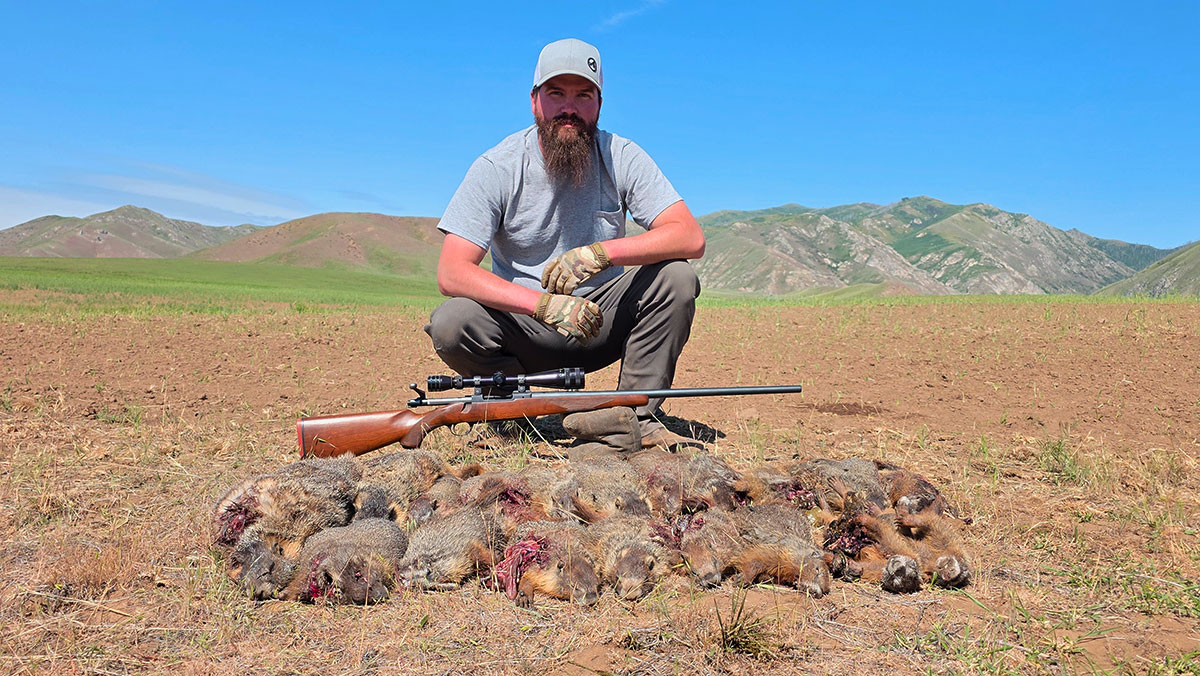
My name is Dakota Storms. As a Nebraska hunter, I’m familiar with wide-open spaces and long shots, but nothing prepared me for my varmint hunt in a mix of plains, ridges, and mountain valleys across Wyoming and Idaho. When Eric Mayer from Varminter Magazine invited me on a multi-state varmint trip, I knew it would be an amazing trip. I had been reading their articles and watching their hunt videos and image posts on social media. Knowing that Eric is all about classic cartridges and rifles, I saw this hunt as a learning experience, as well as a good time to hunt areas I have not hunted before. Lastly, as we hit different areas, I also saw the service we would provide to farmers who were dealing with voracious varmints absolutely destroying their crops. Prairie dogs, rockchucks, and ground squirrels were abundant and destructive. What followed was a combination of every type of shooting, stunning scenery, and an appreciation of the classic small caliber varmint cartridges that I’d only read about.
Wyoming: Prairie Dogs & Small Caliber Ballistics on Prairie Dogs
Prairie dog towns in Western Wyoming are different then the ones we have in my home State of Nebraska. While our area has vast towns that stretch out for miles, Western Wyoming’s Whitetail Prairie Dogs live in smaller colonies, with patches of small groups scattered everywhere. I was offered countless opportunities for shots ranging from 100 to 350 yards, so it was the perfect environment to put several of these small caliber varmint cartridges to the test.
Below, I will include a short history of some of the cartridges I used and my thoughts on each one. There will be future articles on each rifle/cartridge and will include my thoughts, along with some of the other Varminter Magazine writers.
.204 Ruger
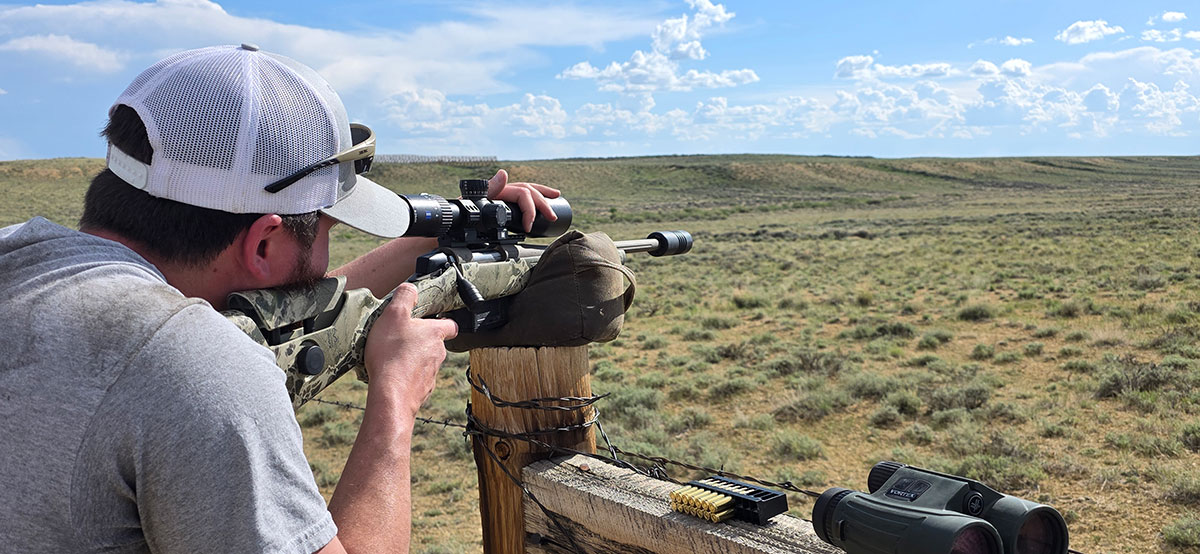
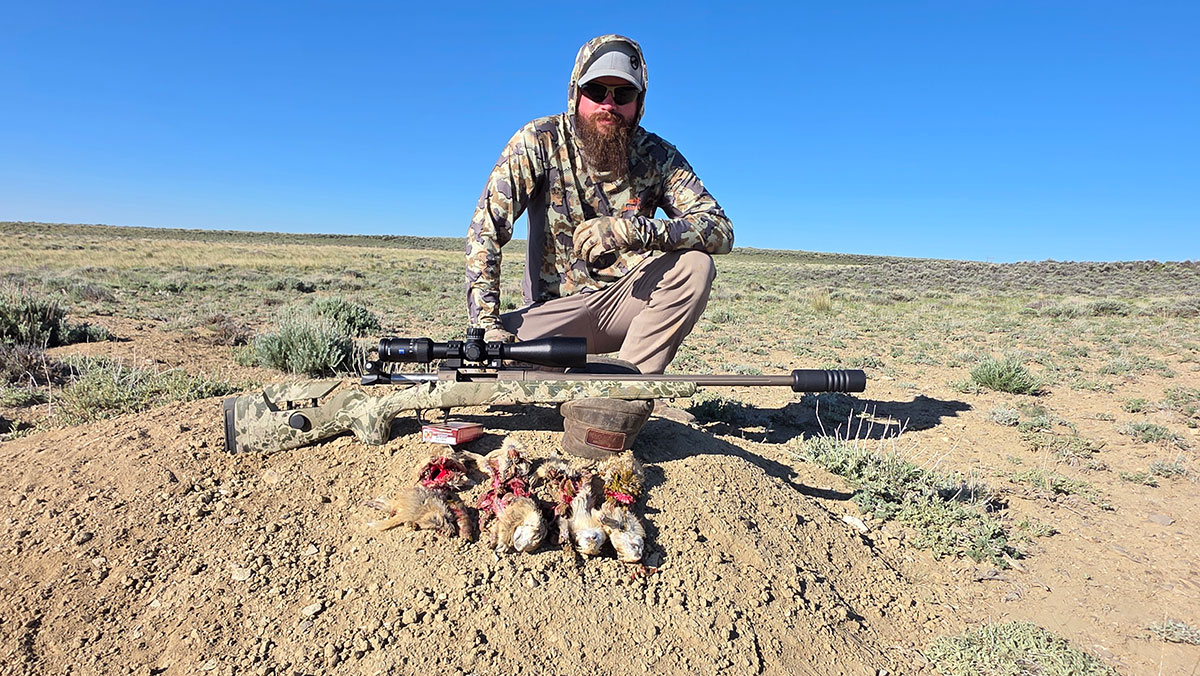
Introduced in 2004, the .204 Ruger became an instant favorite among varmint shooters. Its ability to propel 32–40 grain bullets at high velocity (often over 4,000 fps) makes it exceptionally flat-shooting. Though not a “classic cartridge”, I included it in this article due to the absolute unit of a rifle that I used on Wyoming prairie dogs. Out of the CVA Cascade Varmint Hunter rifle, the .204 Ruger consistently delivered explosive hits on prairie dogs with minimal wind drift and almost no recoil. It was topped with a Zeiss Conquest V4 Rifle Scope 6-24x 50mm which includes the #93 ZMOA-1 Reticle. The clarity of this optic made farther shots much easier to place in the vitals of the prairie dogs, resulting in explosive results!
.22 Jet
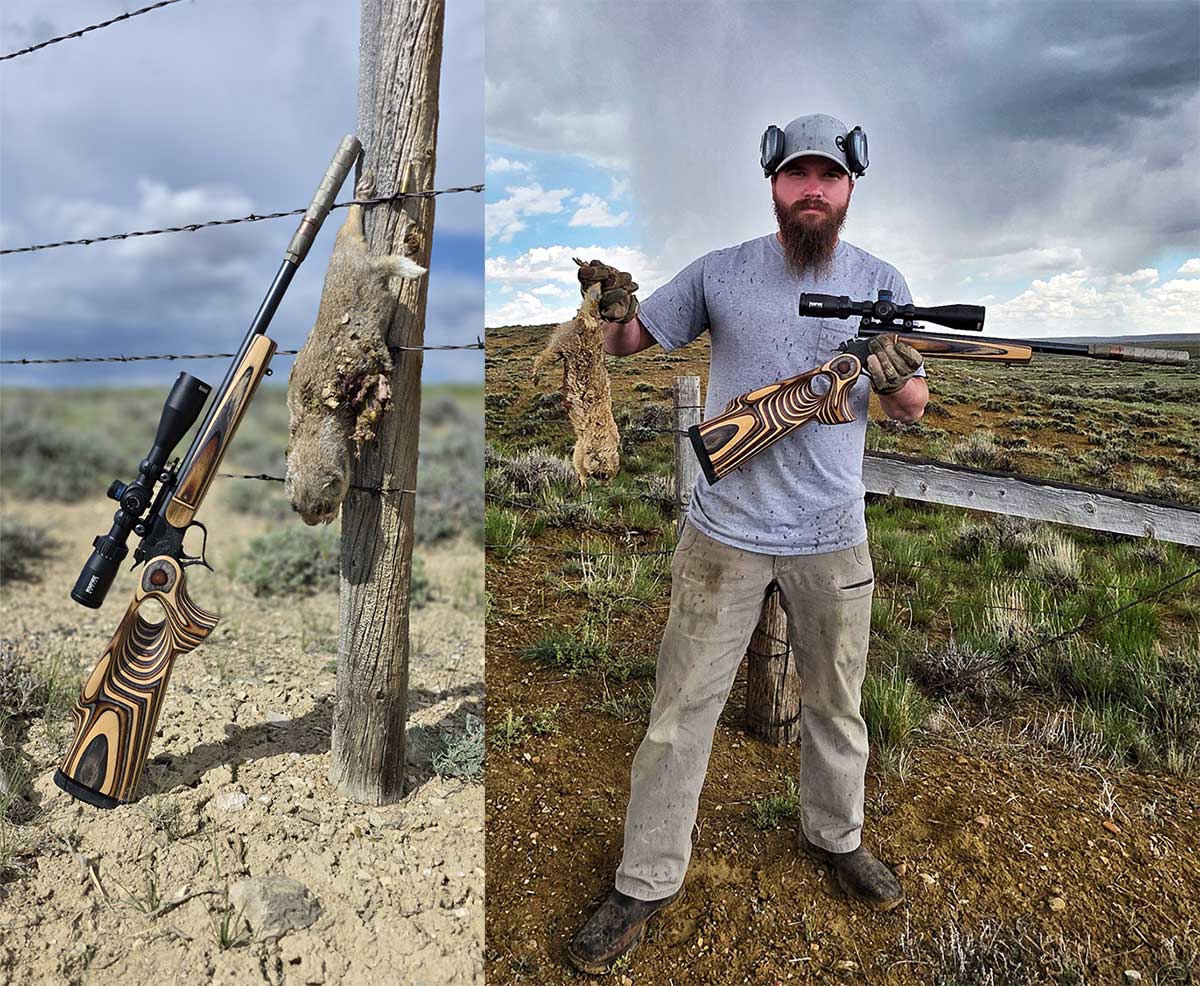
A cartridge completely new to me, the .22 Jet was developed for the S&W Model 53 revolver in the early 1960s, the .22 Rem Jet is a unique bottlenecked cartridge that never truly went mainstream but still has factory ammunition readily available. Eric had a Thompson Contender Carbine rifle chambered in the .22 Jet that he brought for this trip. I was shooting older, 1980s Remington ammunition, loaded with a 40 grain soft point bullet that was very destructive on the prairie dogs. The .22 Jet rifle/cartridge combo proved to be accurate, efficient, and was extremely effective on small varmints in the 100–200 yard range. I was surprised that this little cartridge, with very little recoil, was able to reach out and pop these varmints. It was a really fun cartridge to shoot!
.224 Valkyrie
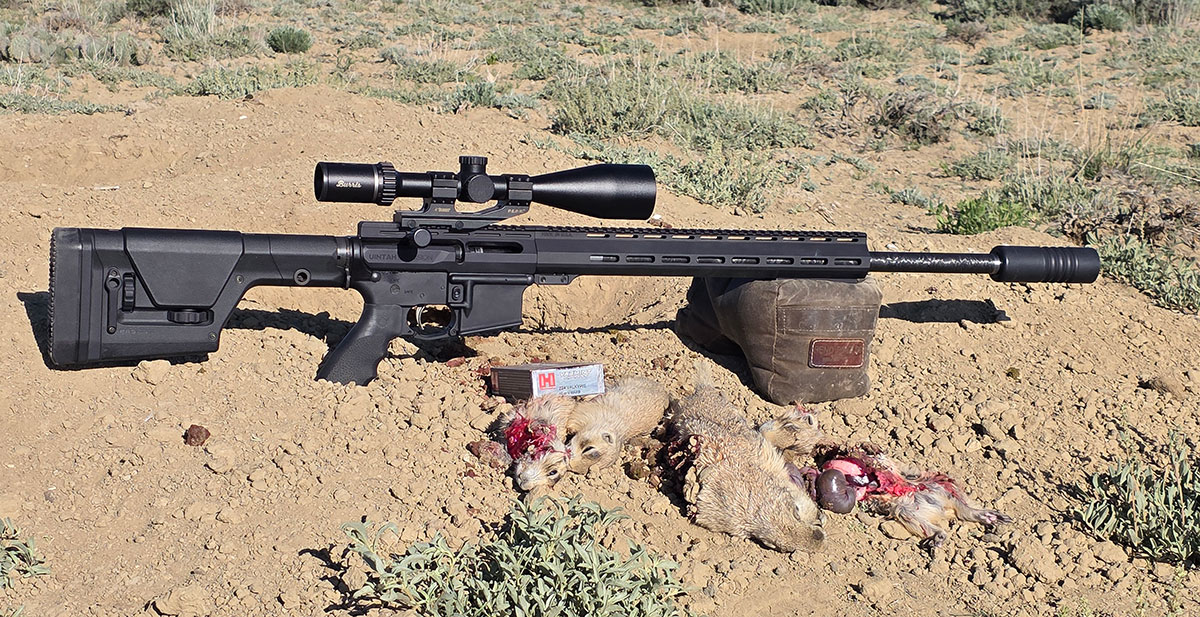
Another, more modern cartridge used. Federal released the .224 Valkyrie in 2017 as a long-range performer for the AR-15 platform. Although it did not do well with the heavier bullets, the lighter varmint bullets is what keeps it alive today. Predator hunters and in my case, varmint hunters, have found that it is an excellent combo that still handles crosswinds well and delivers reliable impacts on prairie dogs even as shots stretched to the upper end of our range. The rifle we used was a Uintah Precision AR15 bolt-action upper. It is a solid receiver, with a carbon fiber wrapped, threaded barrel. Eric had it sitting on a Stag lower, set-up with a Magpul PRS stock. It was a comfortable rifle to shoot and everything Eric had told me about using lighter bullets in the .224 Valkyrie was correct. It is a heck of a varmint rifle! With Wyoming’s abundant targets at ideal distances, it showed what the Valkyrie is capable of.
Idaho: Rockchucks, Ground Squirrels & Mountain Shooting
After a couple of days in Wyoming, we packed up and headed to Eastern Idaho, so we could meet up with Cache Carlson and hunt some rockchucks and ground squirrels. Idaho also offered a very different kind of hunting experience. We hunted rimrock bowls, open alfalfa fields and rolling wheat fields bordered by deep canyon rocky walls. Here, rockchucks and ground squirrels replaced prairie dogs and shots were extended out to 500+ yards.
.220 Swift
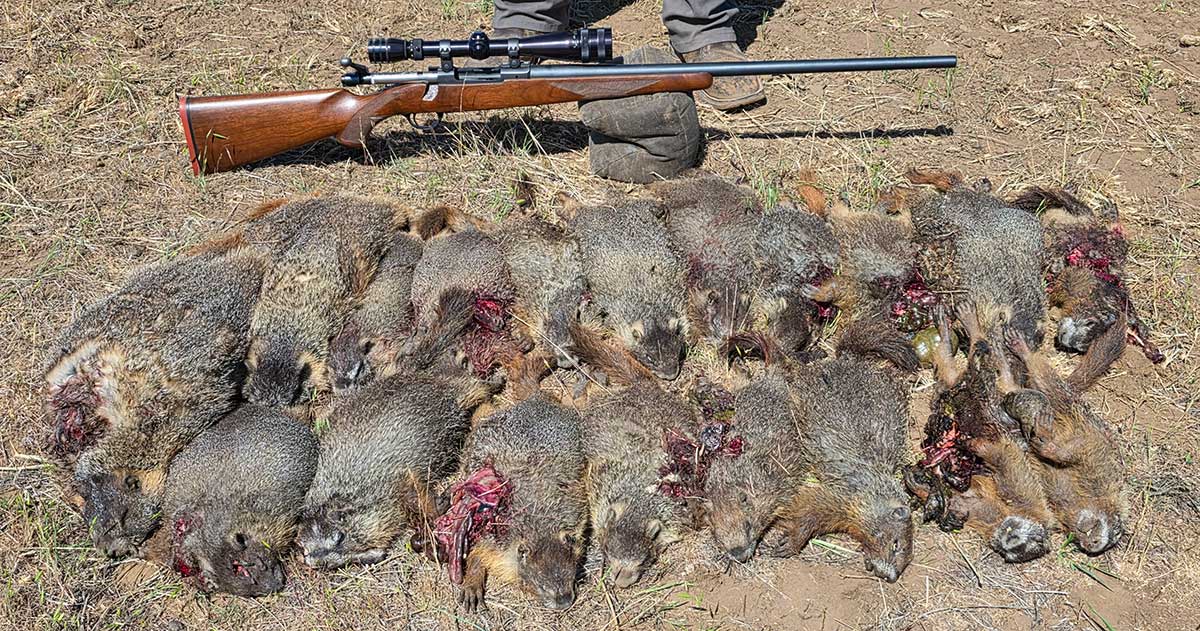
When Winchester introduced the .220 Swift in 1935, it became the first commercial cartridge to break 4,000 fps. Nearly 90 years later, it’s still the considered the king of factory cartridge velocities. In Idaho’s mountains, the Swift provided excellent long-range performance, flattening rockchucks that dared to pop out at extended distances. Eric’s .220 Swift was chambered in a Ruger Model 77 Varmint from 1973 and topped with an older 6-18x Redfield Rifle Scope. After shooting with modern rifles and optics for so many years, this older set-up was a challenge. However, once I got behind the rifle, everything came together quickly. The flat-shooting Swift was extremely effective. I was making solid, DRT shots out past 400 yards with no issues. The farthest rockchuck taken that day was at 515 yards! In all, dozens of rockchucks at various distances, died by the .220 Swift. It is truly a small caliber beast!
.224 Valkyrie
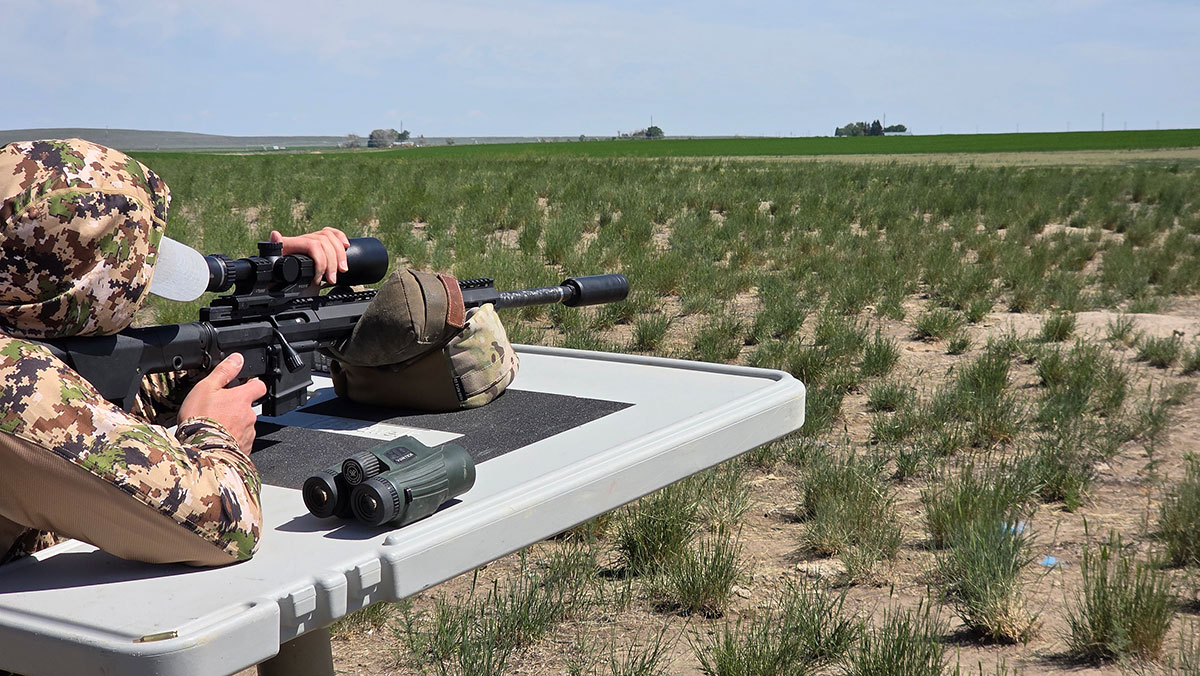
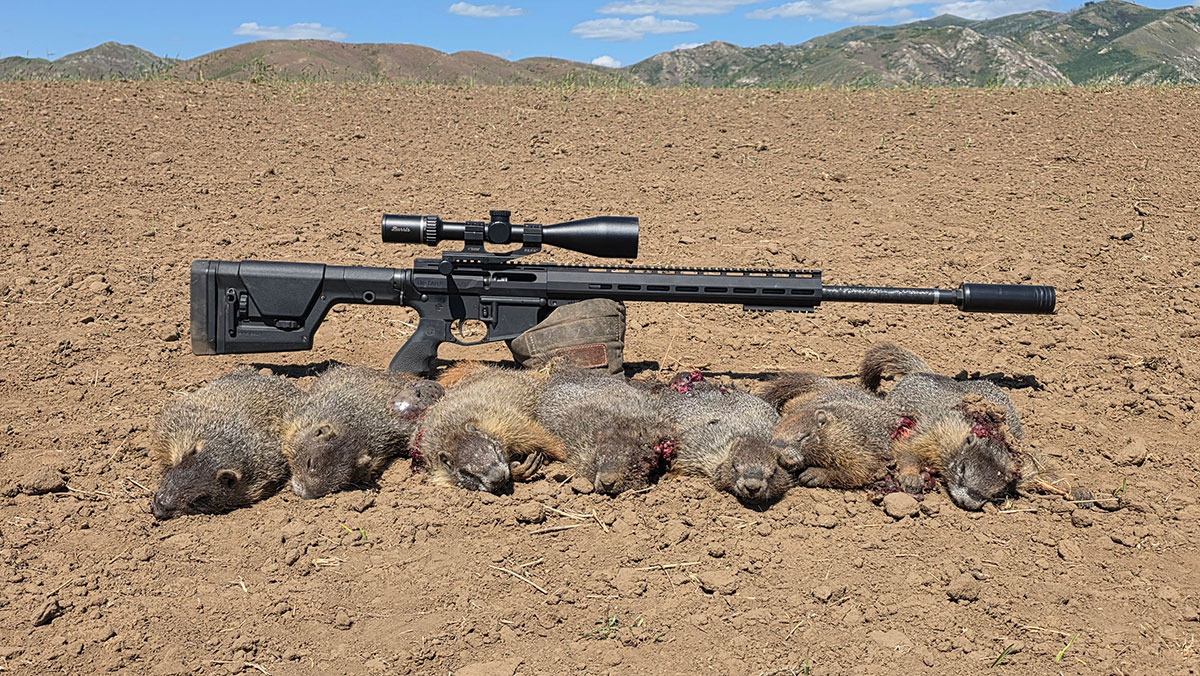
I was so impressed by the .224 Valkyrie rifle, I pulled it out again in Idaho for ground squirrels and rockchucks. The Uintah .224 Valkyrie just exploded ground squirrels on impact. I was shooting from a bench and was able to swivel in many directions, which we shot a huge number of them that were destroying an alfalfa field. While shooting rockchucks, I was able to extend my shots far beyond what I was able to connect with in Wyoming.
5mm Remington Rimfire Magnum
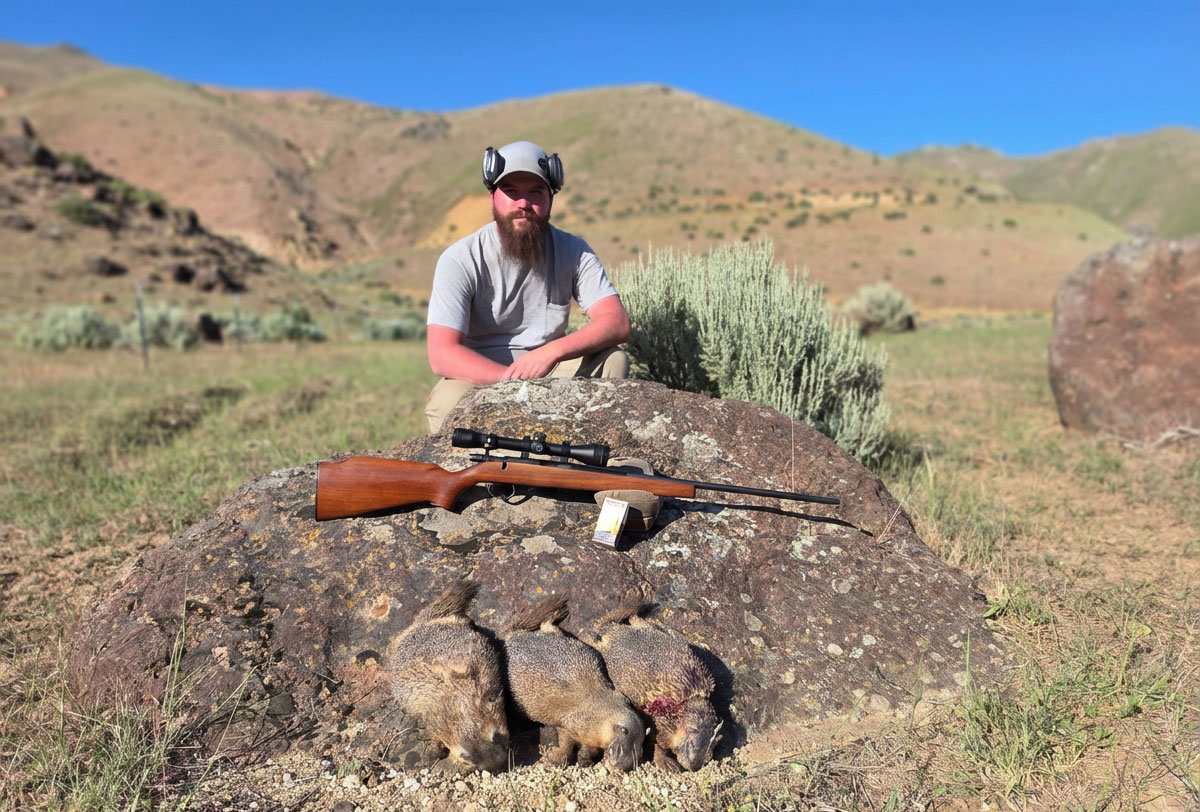
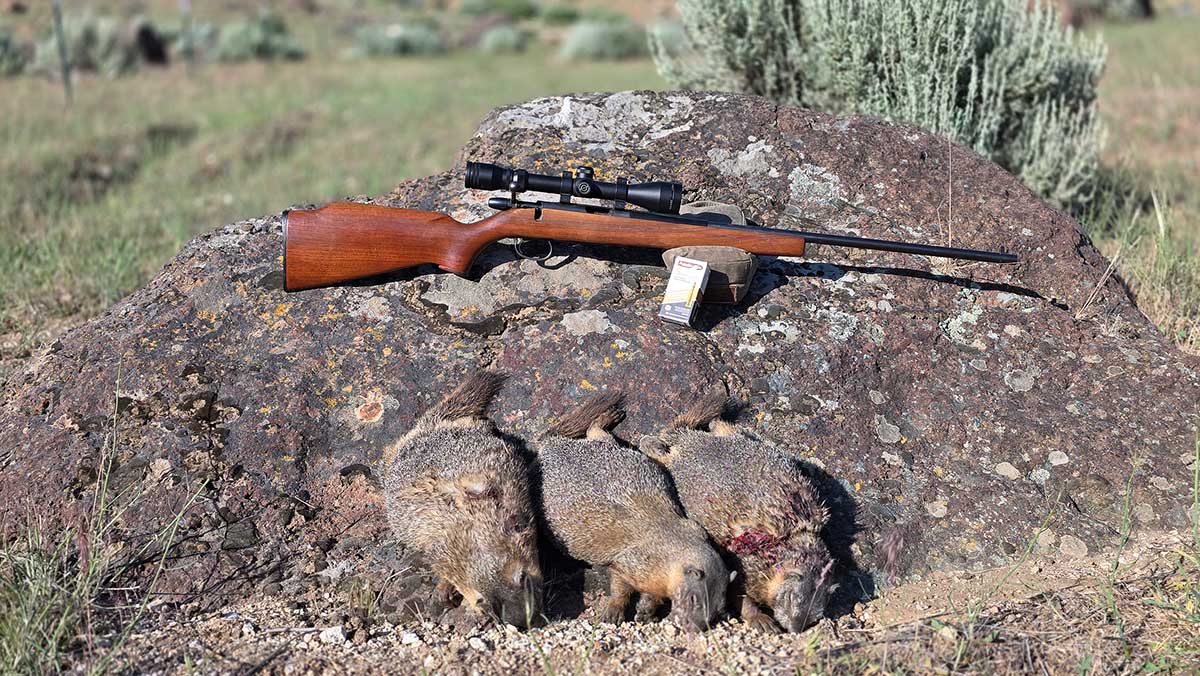
The 5mm Remington Rimfire Magnum was a new one for me. Over the years, I would hear about this .20 caliber rimfire on occasion, but it never stood out as something I wanted to track down and use. The rimfire cartridge was released in 1969 by Remington Arms, along with two rifles, the 591 (magazine feed) and the 592 (tubular magazine feed). Thompson Center Contender also offered a pistol barrel for their original Contender frame. The 5mm RRM offered rimfire varmint shooters a high-velocity / more energy option superior to the .22 WMR, with their 38 grain HP ammunition offering. Though discontinued in the 1980s, later ammunition revival efforts by Centurion Arms and Aguila, brought it back into the hands of shooters. While in the mountains, Eric dropped me off at the top of a small canyon and I worked my way down through the open grass and brush, which was scattered by boulders of all sizes. As I still-hunted through the area, I would spot rockchucks and take shots. The 30 grain SP bullet really thumped these big rockchucks. It was really cool shooting such a unique rimfire and rifle (the 591 version). I wish it was offered again in more modern rifles and an unlimited supply of Aguila ammunition.
.22 Hornet Revolver
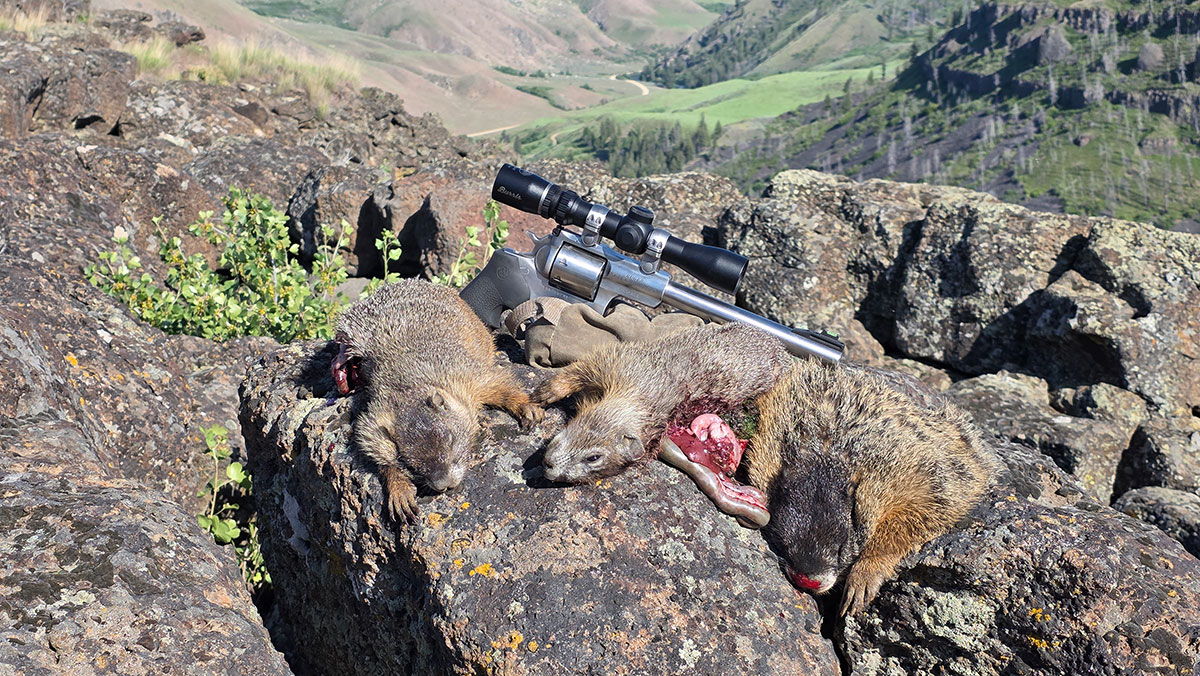
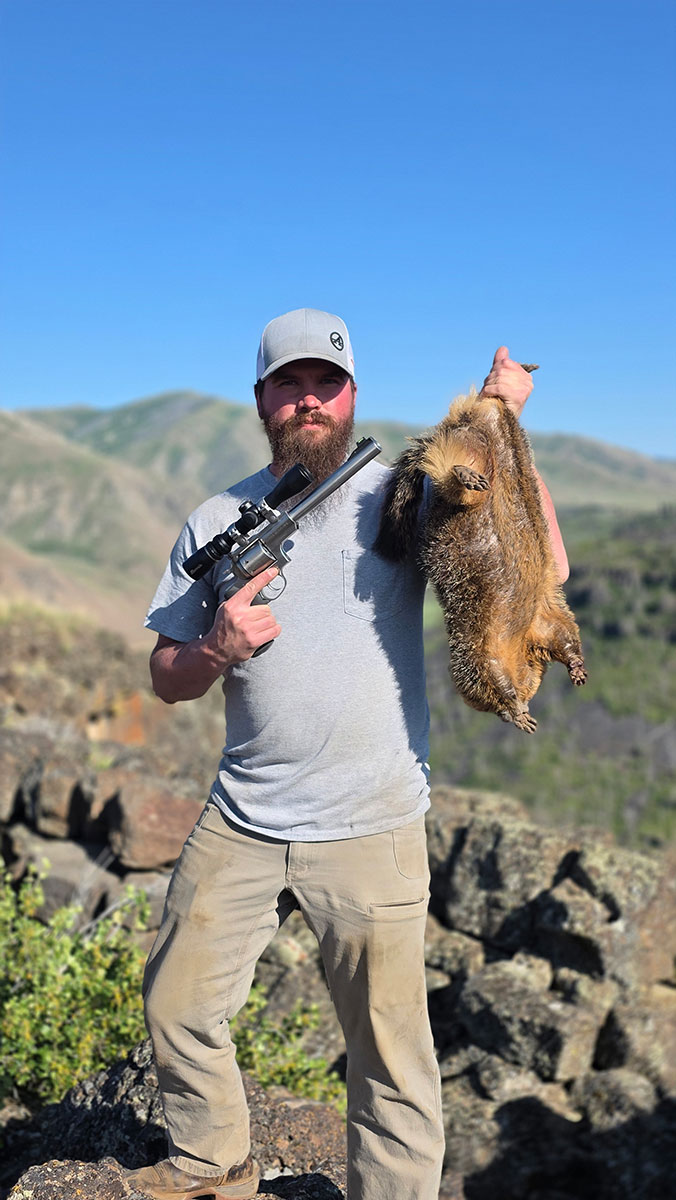
If you ever go down the rabbit hole of centerfire hunting revolvers, you will find that there is a huge community of fine folks shooting everything from rimfires, to small calibers and all the way up to very large caliber cartridges. It is not really a niche, but more of a fascination and obsession, which I now understand is completely understandable. While in Wyoming and Idaho, I was given the opportunity to shoot the Ruger Super Redhawk chambered in .22 Hornet. The .22 Hornet dates back to the 1920s and became one of the first popular small-caliber, high-velocity varmint cartridges. It is known for mild recoil, excellent accuracy, and efficient powder usage and has remained a classic for nearly a century. It is the base cartridge for many wildcat cartridges and factory ammunition, brass and dies are always available. I’ve shot the .22 Hornet before, in a rifle. However, firing it from a revolver brought a fun challenge to the hunt and it was ideal for somewhat close range prairie dog and rockchuck shots. The most fun I had was walking the rimrock of the deep canyon, shooting rockchucks as they popped up onto rocks, or peeked back out at me in curiosity. Walking slowly along the edge, finding them in the pistol scope, then connecting on the shot, made for some of the most challenging hunting I’ve ever experienced! I definitely would like to do it again, soon.
.225 Winchester
The .225 Winchester was another new one for me. It was introduced in 1964 as Winchester’s modern, high-velocity .22-caliber varmint round intended to compete with the .22 Varminter wildcat and their own .220 Swift. It featured a rimmed case and offered excellent accuracy and 3,500+ fps performance with 55-grain bullets. Despite good ballistics, it never gained widespread popularity and was crushed after Remington brought the .22 Varminter into commercial status and renaming it the .22-250 Remington. By the late 1970s, rifle and ammunition production declined, and today the .225 Winchester remains an interesting but obscure cartridge, appreciated mostly by collectors and handloaders.
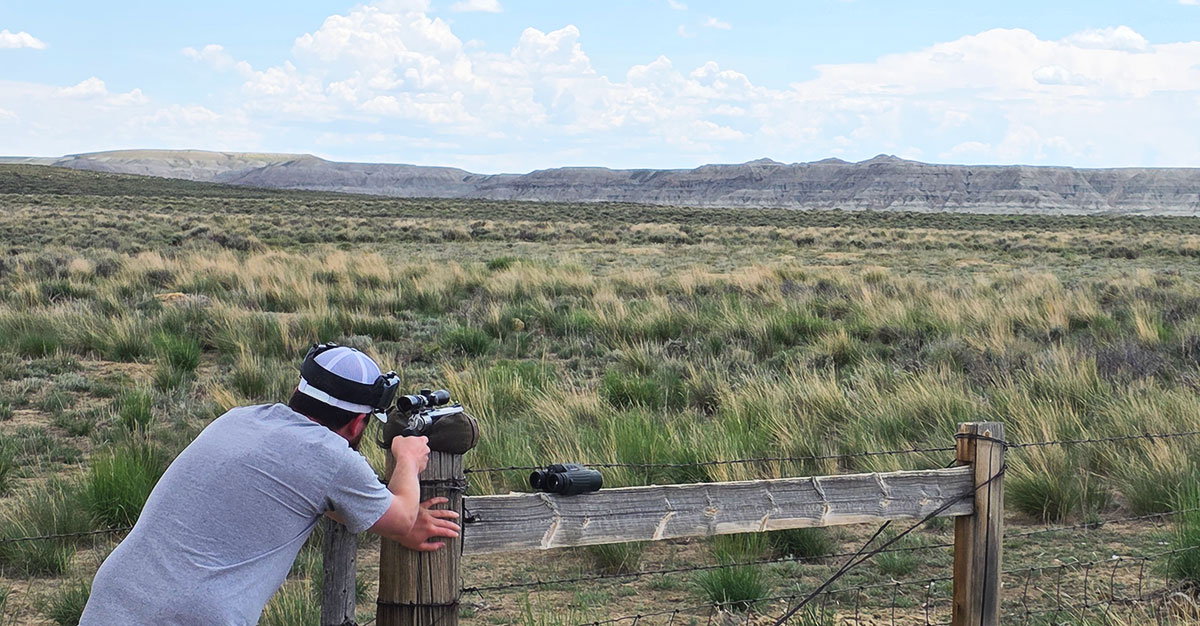
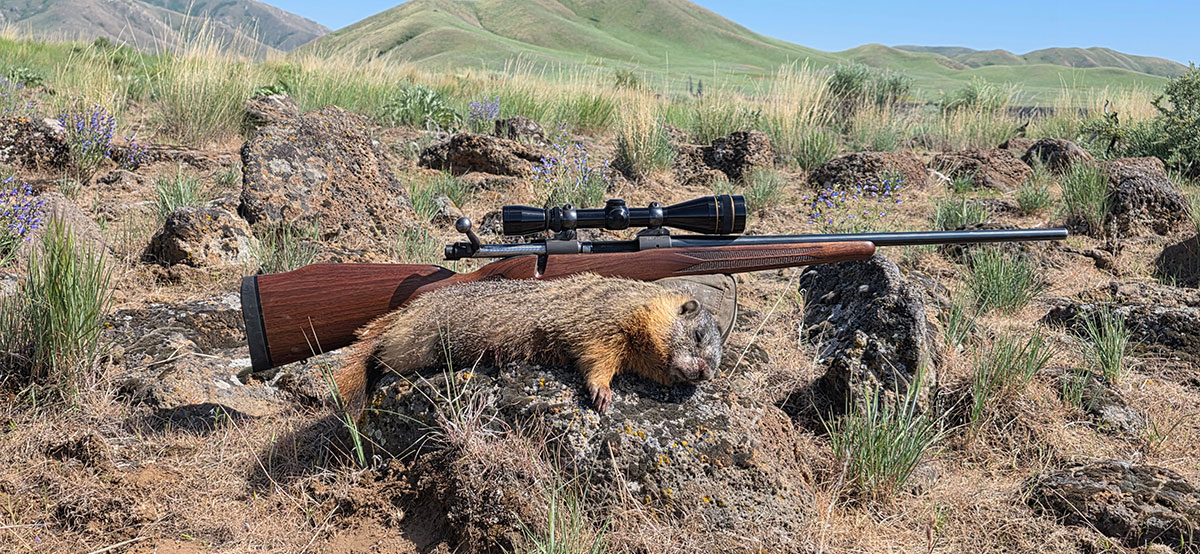
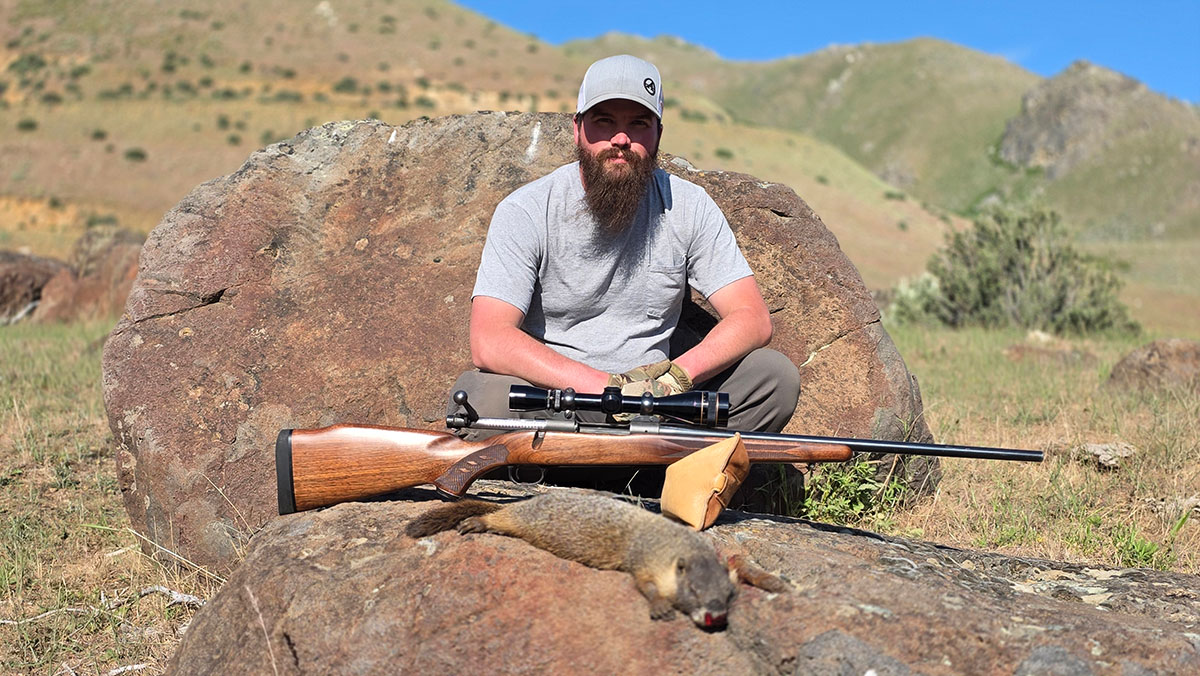
The rifle I shot was a 1965 Winchester Model 70, topped off by a period Leupold 4-12x rifle scope. First, let me address the clarity of these older scopes. Surprisingly, all of the older scopes I used were very clear and had fine enough crosshairs so that even low powered optics were still viable for longer shots. Back to the hunt. We were set-up on the edge of a huge wheat field that was being annihilated by fat, hungry rockchucks. The farmer asked us to shoot the edges and remove as many as we could. I made it my mission to help him out and kill a bunch. The .225 Winchester was loaded with some 1980s factory Winchester 50 grain SP ammunition. The power of this cartridge was impressive! The first few rockchucks I hit actually caught some air and launched off rocks, or landed in a poof of dust in the field. Here I was, shooting a 60 year old rifle, knocking out rockchucks, just like the old time varminters who first got their hands on these Model 70s. Again, it was a lot of fun to shoot and the results were perfect.
Final Thoughts on My Western Varmint Adventure
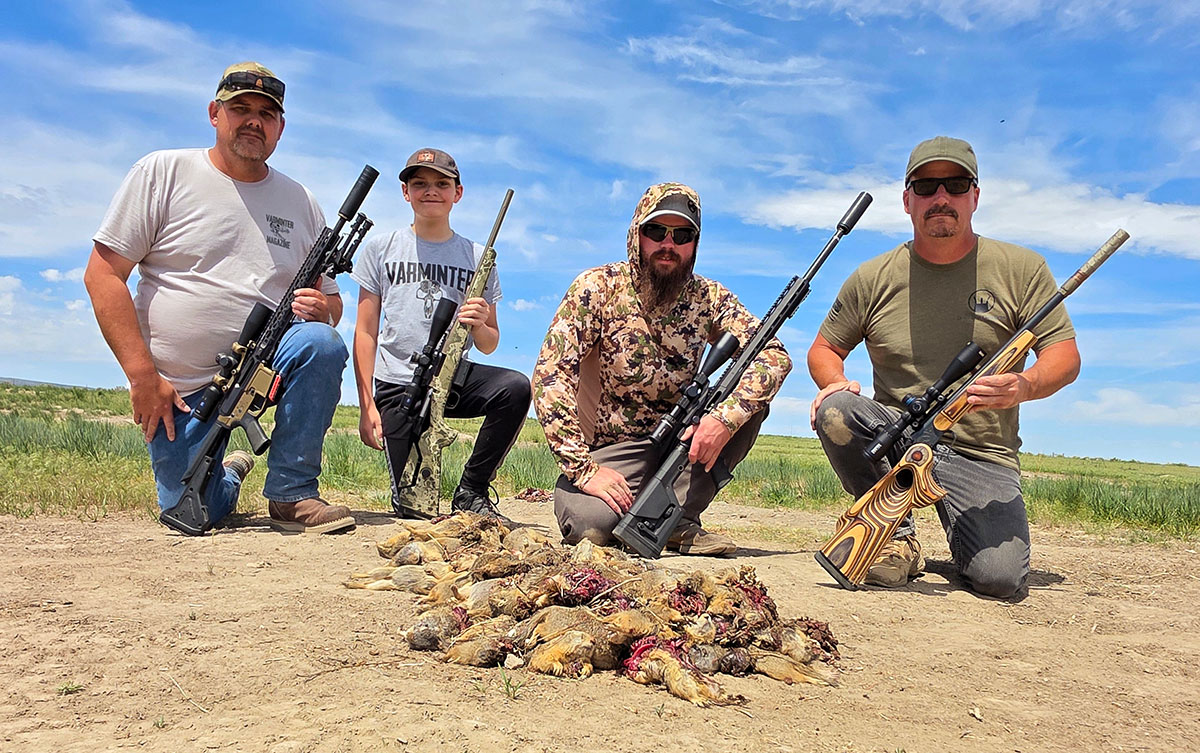
I’ve done a lot of varmint hunting in my life, most of it here in Nebraska. The chance to meet up with the Varminter crew and hunt new areas was something I was really looking forward to. Now that the hunt is over and I’ve had a chance to reflect on the time spent in Wyoming and Idaho, I really want to go back and experience it again. The chance to shoot all types of rifles and cartridges (modern, classic, wildcat, rimfire, and revolver), made every day a cool experience and at times, a look back in time. The areas we hunted also gave some insight on what Western hunting offered in the way of terrain and scenery. Both States had their own way of making my varmint hunting adventure very unique. Which only added to the overall experience of popping varmints in new areas, with unique rifles and cartridges. I have a lot of new things on my plate and working with Varminter Magazine to write both hunting pieces and technical articles, will help me expand my new projects and share with others who are part of this community.
In the end, the trip delivered everything a Western varmint hunt should: good shooting, worthwhile work, incredible scenery, and memories I’ll carry for years. I’m already planning when I can head back.
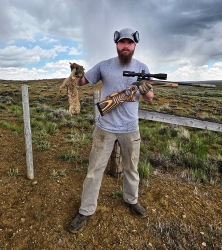
- A Nebraska Hunter’s Western Varmint Adventure - December 3, 2025
Leave a Reply
You must be logged in to post a comment