Carp (Cyprinus carpio)
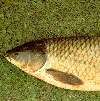 Carp are one of the World's most
widely distributed freshwater fish. Carp can be identified by the two
barbels or whiskers on either corner of their upper lip. Other distinguishing
features include a forked tail, single dorsal fin and large scales. They are
usually bronze or olive green with a pale yellow to ivory
underbelly.
Carp are one of the World's most
widely distributed freshwater fish. Carp can be identified by the two
barbels or whiskers on either corner of their upper lip. Other distinguishing
features include a forked tail, single dorsal fin and large scales. They are
usually bronze or olive green with a pale yellow to ivory
underbelly.
Their feeding can result in environmental problems. Carp feed by sucking up mud and plants from the bottom and blowing out what they don't want. This feeding behaviour (roiling) muddies the water and can uproot aquatic vegetation. Less light can penetrate muddy water resulting in reduced plant matter and oxygen levels.
A female carp can produce over one million eggs per kilogram of body weight and can spawn more than once a year in warmer waters. While Carp are not predators, it is possible they eat eggs and disturb the laying sites of native fish species. Large decreases in native fish numbers and other types of river degradation have been blamed on carp. There is no clear evidence to support this and it is possible that human influences such as agricultural run-off and river regulation have degraded our natural aquatic systems to a point where carp are the only fish that can prosper.
IT IS ALMOST IMPOSSIBLE TO ERADICATE CARP ONCE THEY HAVE ESTABLISHED
Information was supplied from the Carp Busters Website at http://www.carpbusters.com.au